Drift detection for Azure Landing Zones
Landing Zones provide structure, but real-world changes introduce drift. CloudMind highlights architecture drift so teams can respond quickly and reduce risk.
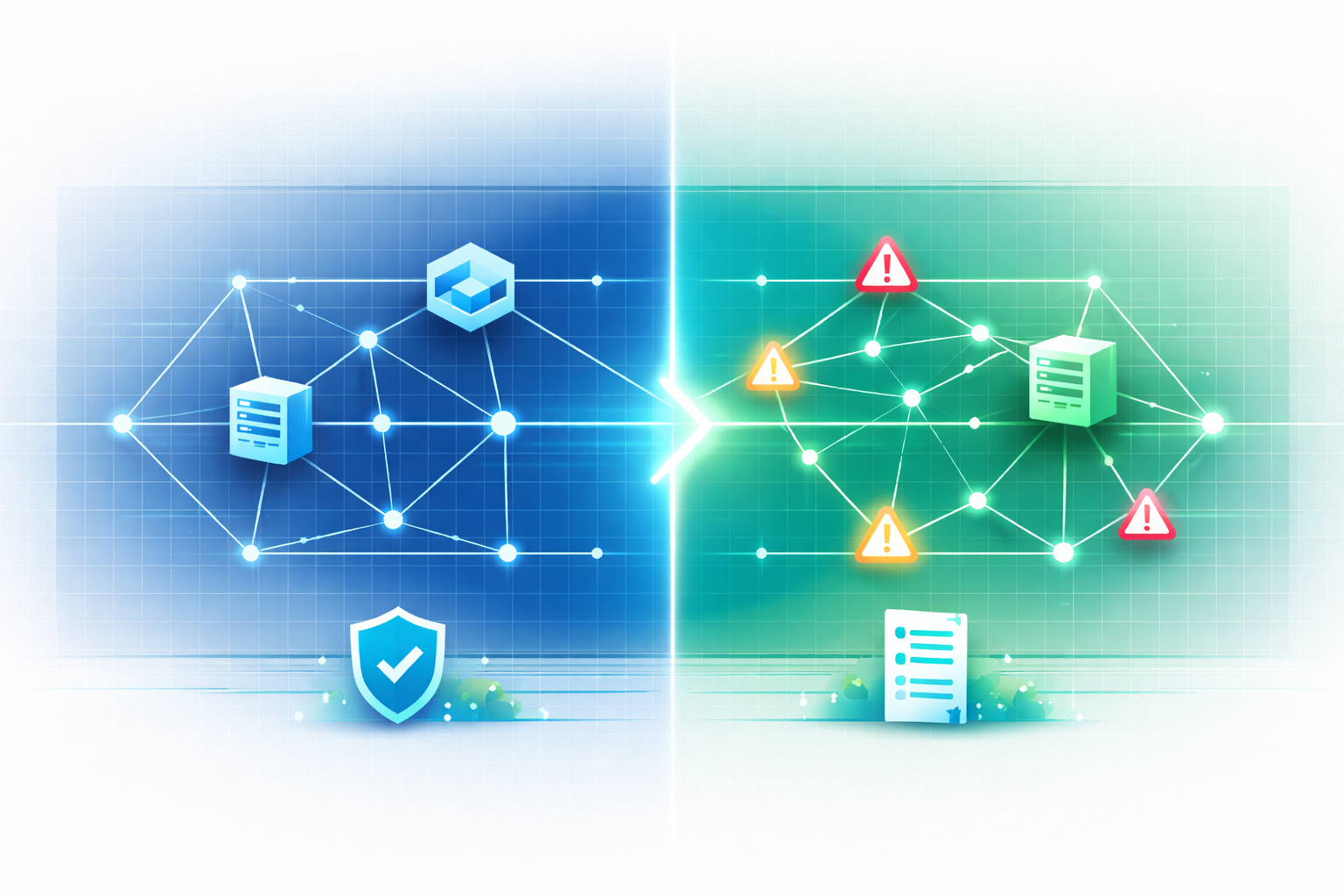
Landing Zones establish the blueprint for how teams should build in Azure — identity, networking, management groups, policies, and guardrails. But over time, the deployed state diverges.
Drift isn’t always “bad.” Some drift is intentional (temporary exceptions), some is accidental (manual changes), and some is a sign of process gaps. The problem is not drift itself — it’s drift you can’t see.
What drift looks like in real teams
- Networking patterns diverge from standard: new peerings, subnet expansions, “just this once” routes
- Policy changes happen outside of IaC pipelines and are hard to reconcile later
- Subscriptions sprawl: inconsistent naming, missing tags, governance gaps
- Security posture evolves, but documentation does not (creating blind spots)
How CloudMind helps
CloudMind detects drift across environments and subscriptions so platform teams can prioritize risk, validate governance posture, and keep documentation current.
- Highlights meaningful changes in your architecture map over time
- Surfaces relationship changes that expand blast radius (new dependencies)
- Makes exceptions visible, so “temporary” doesn’t become “forever”
- Supports governance conversations with evidence, not assumptions
Best practices to reduce drift
- Standardize naming/tagging conventions and treat them as part of platform hygiene
- Prefer automation + guardrails over tribal knowledge and “runbook archaeology”
- Review relationship changes (dependencies) as part of operational readiness
- Make architecture documentation a byproduct of deployed state, not a separate project
A Landing Zone is a starting point. Drift detection is how you keep it healthy as the organization scales.